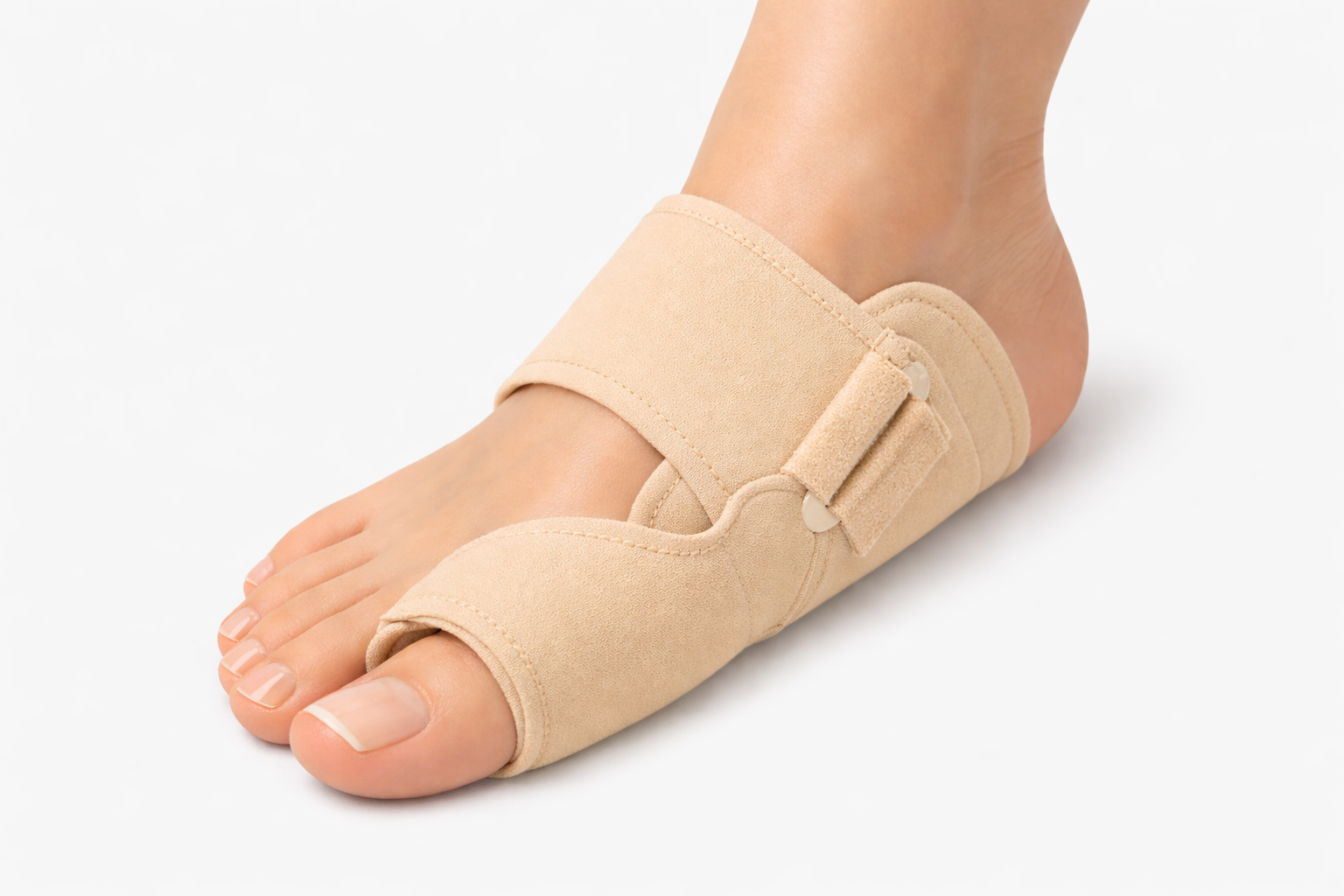
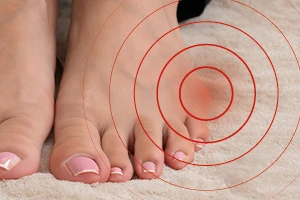
Unfortunately, we don’t exactly know the main cause of bunions. However, there are some factors that are connected to the development of a bunion.
1 | Genetics
Bunions often run in families. What’s inherited isn’t the bunion itself, but the foot structure. Things like flexible ligaments, flat feet, or joint instability can play a role in the development of a bunion.
If your parents or grandparents had bunions, your odds are higher. This is why some people can wear narrow shoes without issues, while others develop bunions despite wearing proper footwear.
Unfortunately, there’s not much you can do to stop a bunion from forming if the cause is genetic.
2 | Foot mechanics and alignment
How your foot moves matters. Bunions are more likely if you have flat feet, overpronation, or loose or unstable joints. These mechanics place extra stress on the big toe joint, gradually pulling it out of alignment.
So again, foot structure plays a large role in the development of bunions.
3 | Shoes that squeeze the toes (a.k.a. narrow or tight shoes)
Shoes don’t usually cause bunions, but they can absolutely make them worse.
Tight toe boxes, narrow shoes, and high heels push the big toe inward and increase pressure on the joint. Over time, this accelerates bunion development and increases pain.
4 | Repetitive stress on the feet
Activities or jobs that keep you on your feet for long periods (especially with limited foot support) can worsen bunions. Ballet dancers, servers, retail workers, and healthcare professionals often experience faster progression. To name a few.
5 | Arthritis and joint conditions
Inflammatory conditions like rheumatoid arthritis can weaken joints and make bunions more likely or more severe. Arthritis can also increase stiffness and pain once a bunion forms.
Learn more about bunions in our blog.